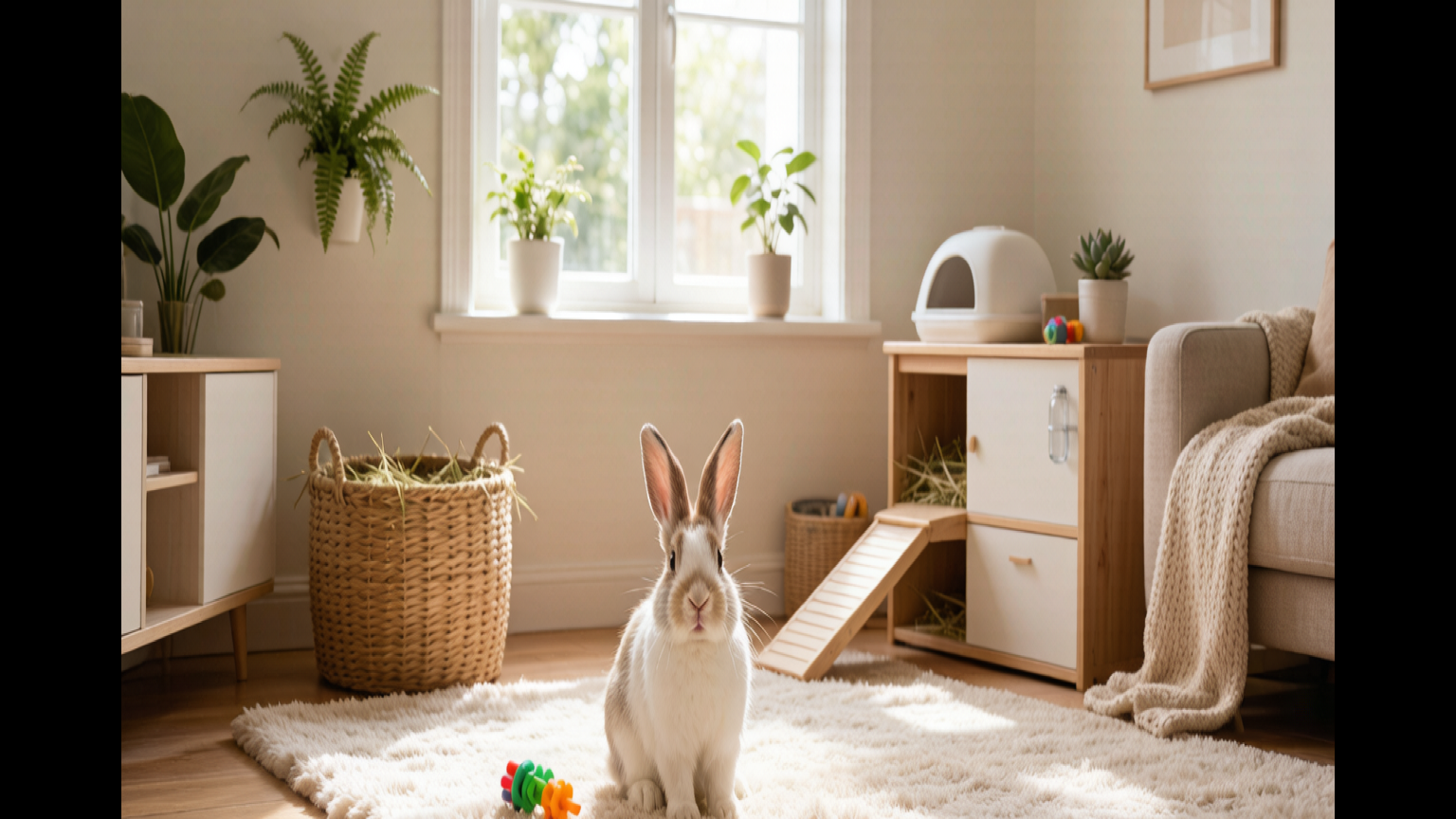
The image of a rabbit confined to a hutch is outdated. Rabbits are intelligent, active animals who in the wild patrol territories measured in acres. A free-roam setup dramatically improves physical health, mental well-being, and the depth of the rabbit-human bond.
Why Free-Roaming Matters
Cage-confined rabbits suffer muscle atrophy, obesity, sore hocks, and psychological distress. Free-roam rabbits with space to run, binky (joyful leaping), and explore are healthier. They also develop stronger bonds with owners through choice-based interaction.
The Rabbit-Proofing Checklist
Electrical Cords: The #1 target. Cover all cords with heavy-duty split loom tubing or PVC channels. Baseboards: Protect with plastic corner guards or NIC grid panels. Carpet: Provide dig boxes and chew toys to redirect natural digging behavior. Area rugs provide traction for running. Furniture: Block access behind and under sofas and beds. Plants: All must be rabbit-safe or completely inaccessible. Small Objects: Anything chewable or ingestible must be out of reach.
Essential Setup
A home base with large litter box (paper or aspen litter only — never clay), hay rack positioned over or next to the box, heavy ceramic water bowl, multiple hiding spots with two exits, and various flooring textures for traction.


