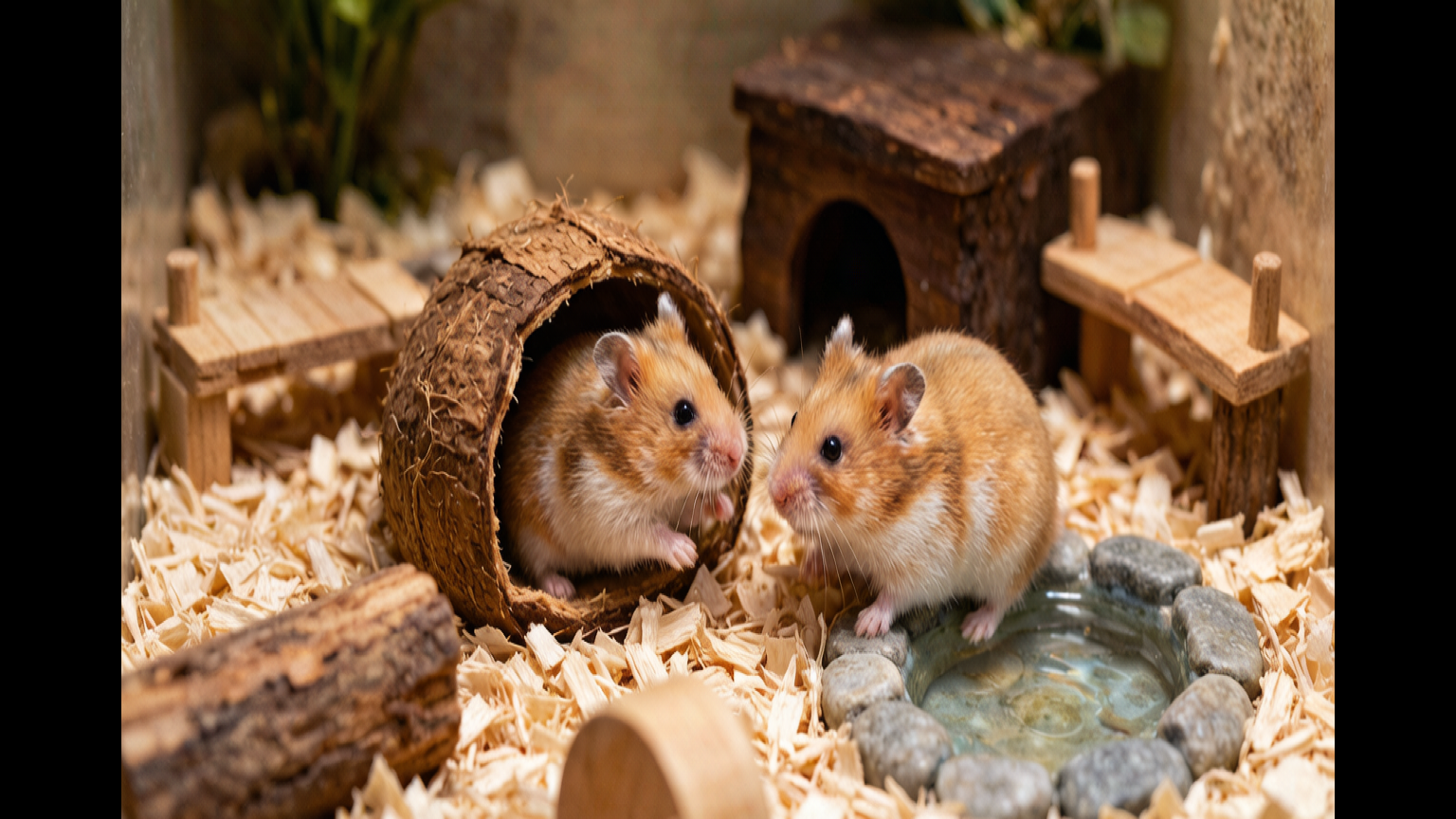
The pet store image of multiple hamsters happily cuddling in a cage is one of the most misleading representations in the pet industry. The reality of hamster cohabitation is starkly different, and getting it wrong means waking up to injured or dead hamsters.
The Fundamental Rule
Syrian (Golden) hamsters must ALWAYS be housed alone. No exceptions, no “but they’re siblings,” no “they’ve been fine so far.” Syrian hamsters are fiercely solitary and territorial. Two Syrians in the same enclosure will fight, and these fights frequently escalate to severe injury or death. This applies to males, females, siblings, parent-offspring — every combination. Even if raised together from birth, Syrians must be separated by 6-8 weeks of age or fighting will begin.
The Gray Zone: Dwarf Species
Dwarf hamsters (Campbell’s, Winter White, Roborovski, Chinese) are sometimes successfully housed in same-sex pairs or small groups, but this is a complex social arrangement that requires specific conditions and constant vigilance.
Requirements for Attempting Dwarf Cohabitation: Littermates of the same sex who have never been separated — introducing unrelated adults almost always fails. Enclosure size of at least 600+ square inches with multiple of every resource (two wheels, two water bottles, two food stations, multiple hideouts) to prevent competition. Total cage clean-out followed by complete redistribution of all scents before introduction — existing scents trigger territorial aggression. Continuous monitoring for the first 48 hours — be prepared to permanently separate at the first sign of serious conflict.
Warning Signs of Imminent Fighting: One hamster constantly hiding while the dominant hamster patrols, high-pitched squeaking during encounters, chasing that doesn’t stop, one hamster losing weight while the other gains, and any visible wounds (bite marks, missing fur patches). Any of these signs means immediate, permanent separation.
The Safer Conclusion
Given that even “successful” pairings require twice the resources and constant monitoring, and pair bonds can break down suddenly after months of apparent harmony, the safest approach for most owners is to house all hamster species individually. A single hamster with an enriched, appropriately sized enclosure will live a perfectly happy, stress-free life without the risk of violent conflict.