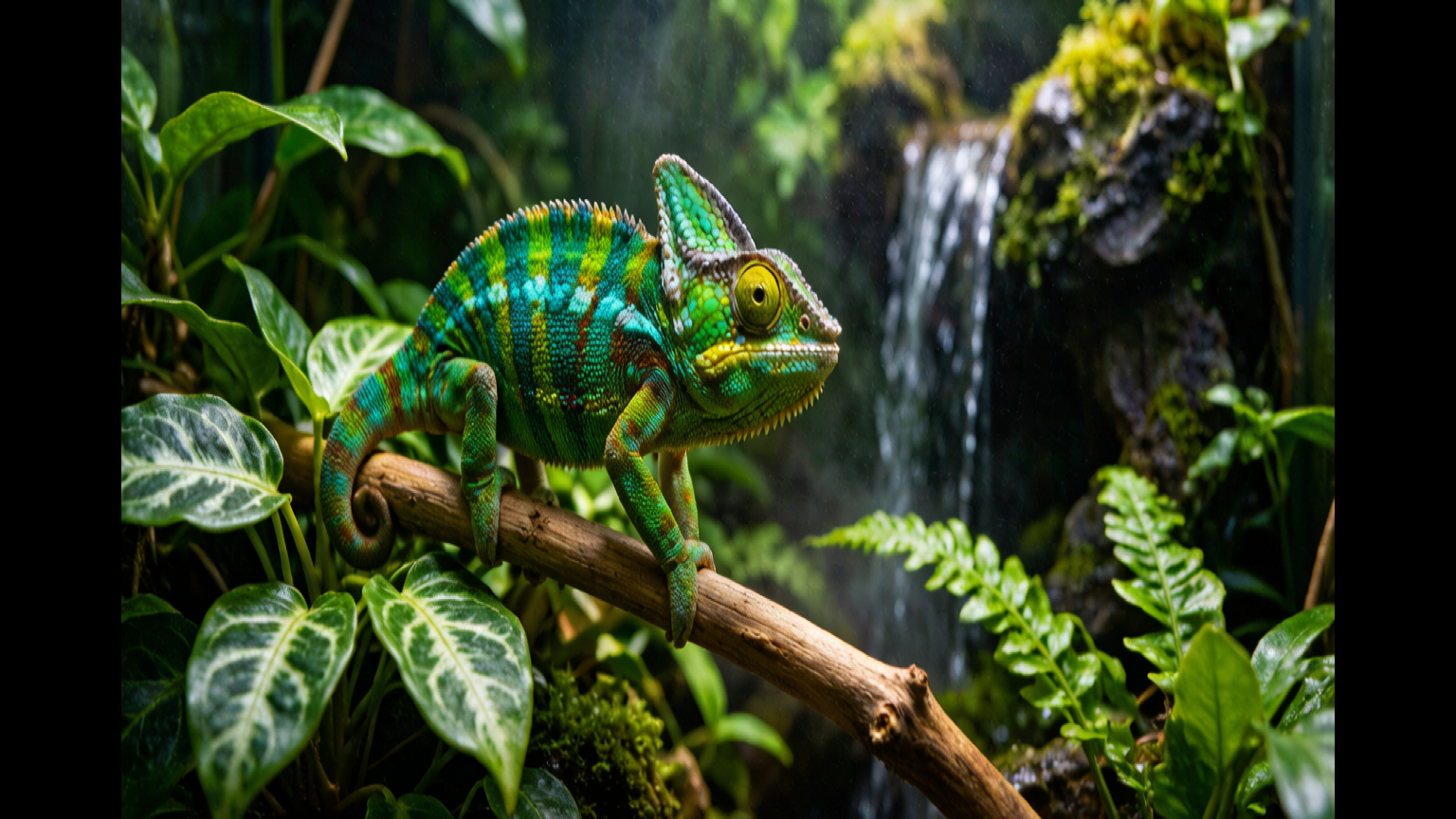
A chameleon refusing food is one of the most common and alarming problems keepers face. Chameleons are obligate insectivores with high metabolic rates — a healthy adult can skip a day or two, but prolonged anorexia in chameleons quickly becomes life-threatening. The diagnostic approach must be systematic.
Step 1: Verify Temperature Gradient
Chameleons are ectothermic — their entire metabolism depends on reaching proper body temperature. A basking spot that’s too cool means they can’t digest food from yesterday, and they won’t eat again. Veiled Chameleons: basking 90-95°F (32-35°C). Panther Chameleons: basking 85-90°F (29-32°C). Jackson’s Chameleons: basking 80-83°F (27-28°C) — these montane species overheat easily. Verify with an infrared temperature gun at the exact basking location — never rely on ambient thermometers.
Step 2: Check UVB Lighting
UVB degrades over time. If your UVB bulb is more than 6 months old (T5 HO) or 4 months old (compact coil), it may no longer produce adequate UVB even if it still emits visible light. Insufficient UVB → insufficient vitamin D3 synthesis → calcium absorption failure → appetite suppression. This is corrected by new bulb + calcium with D3 supplementation.
Step 3: Assess Hydration
Chameleons drink water droplets from leaves — they will NOT drink from standing water bowls. Dehydration suppresses appetite. Signs: sunken eyes, wrinkled skin, thick sticky saliva, and orange (rather than white) urates. Increase misting frequency and duration — automated misting systems are strongly recommended over manual spraying.
Steps 4-7: Stress, Impaction, Parasites, and Disease
Step 4 — Stressors: Too much handling, visible reflection in glass, other pets in view, cage too small, or too exposed without adequate foliage cover. Chameleons are solitary, territorial animals who experience chronic stress in inappropriate enclosures. Step 5 — Impaction: Substrate ingestion, oversized feeder insects, or dehydration can cause digestive blockages. Step 6 — Parasites: Coccidia, pinworms, and flagellates are common in captive chameleons and cause appetite loss. A fecal float test at an exotic veterinarian is the only way to diagnose. Step 7 — Systemic Disease: Kidney disease, liver disease, respiratory infections, and egg binding in females are all potential causes of anorexia requiring immediate veterinary care.