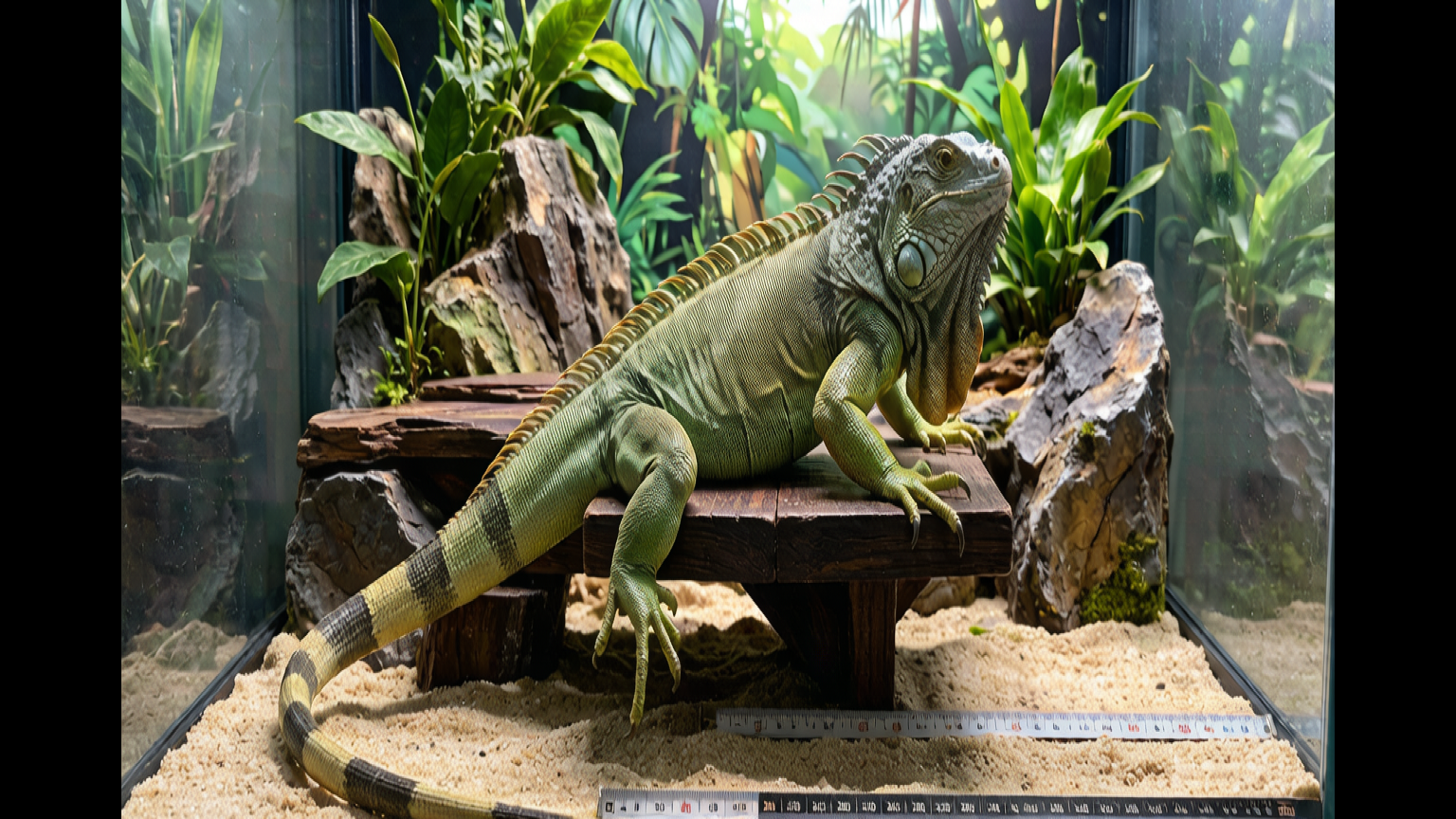
The baby Green Iguana at the pet store is 8 inches long, bright green, and costs $20—an impulse-buy disaster waiting to happen. What the pet store rarely explains is that this tiny lizard will become a 5-6 foot (1.5-1.8 meter), 15-20 pound (7-9 kg) arboreal giant requiring a custom-built enclosure the size of a small room. Animal shelters and reptile rescues are overwhelmed with surrendered adult iguanas from owners who had no idea what they were getting into.
The Reality of Adult Iguana Size
Green Iguanas reach sexual maturity at 2-3 years and continue growing until approximately age 7. An adult male can reach 6 feet (1.8 m) from nose to tail tip, with 70% of that length being the powerful, whip-like tail. Females typically reach 4-5 feet (1.2-1.5 m). Their enclosure must be at minimum 6′ tall × 6′ wide × 3′ deep (1.8m × 1.8m × 0.9m) — and this is considered the bare minimum by experienced keepers. Many dedicated iguana owners eventually convert an entire spare bedroom into an iguana habitat.
The Behavioral Reality
Iguanas are not cuddly pets by default. Wild iguanas are solitary, territorial animals who use aggressive displays — head-bobbing, dewlap extension, body inflation, tail-whipping, and biting — to defend territory. Breeding season (typically November-February in the Northern Hemisphere) transforms even previously docile males into hormonally aggressive animals who may attack their owners. Their iguana bites can cause serious injury requiring stitches. Taming an iguana requires daily, consistent handling from a young age — and even tame iguanas remain unpredictable during breeding season.
The Dietary Demands
Iguanas are strict herbivores requiring a varied diet of calcium-rich dark leafy greens (collard, mustard, dandelion, turnip greens — never iceberg lettuce, which is nutritionally empty), vegetables (squash, green beans, bell peppers), and small amounts of fruit as treats. All food must be chopped to appropriate sizes, and calcium and vitamin supplements are added on a strict schedule. Improper diet is the leading cause of Metabolic Bone Disease, kidney failure, and premature death in captive iguanas.
Before You Buy That Baby Iguana
Ask yourself honestly: Do you have space for a 6’×6’×3′ enclosure? Do you have $500-$1,500 to build it? Can you commit to daily feeding, cleaning, and handling for 15-20 years (their lifespan)? Can you handle an animal that may become aggressive for months at a time every year? If any answer is “no,” appreciate iguanas at a zoo or through photos — they are magnificent animals who deserve better than being dumped at a rescue at 3 years old by overwhelmed owners.