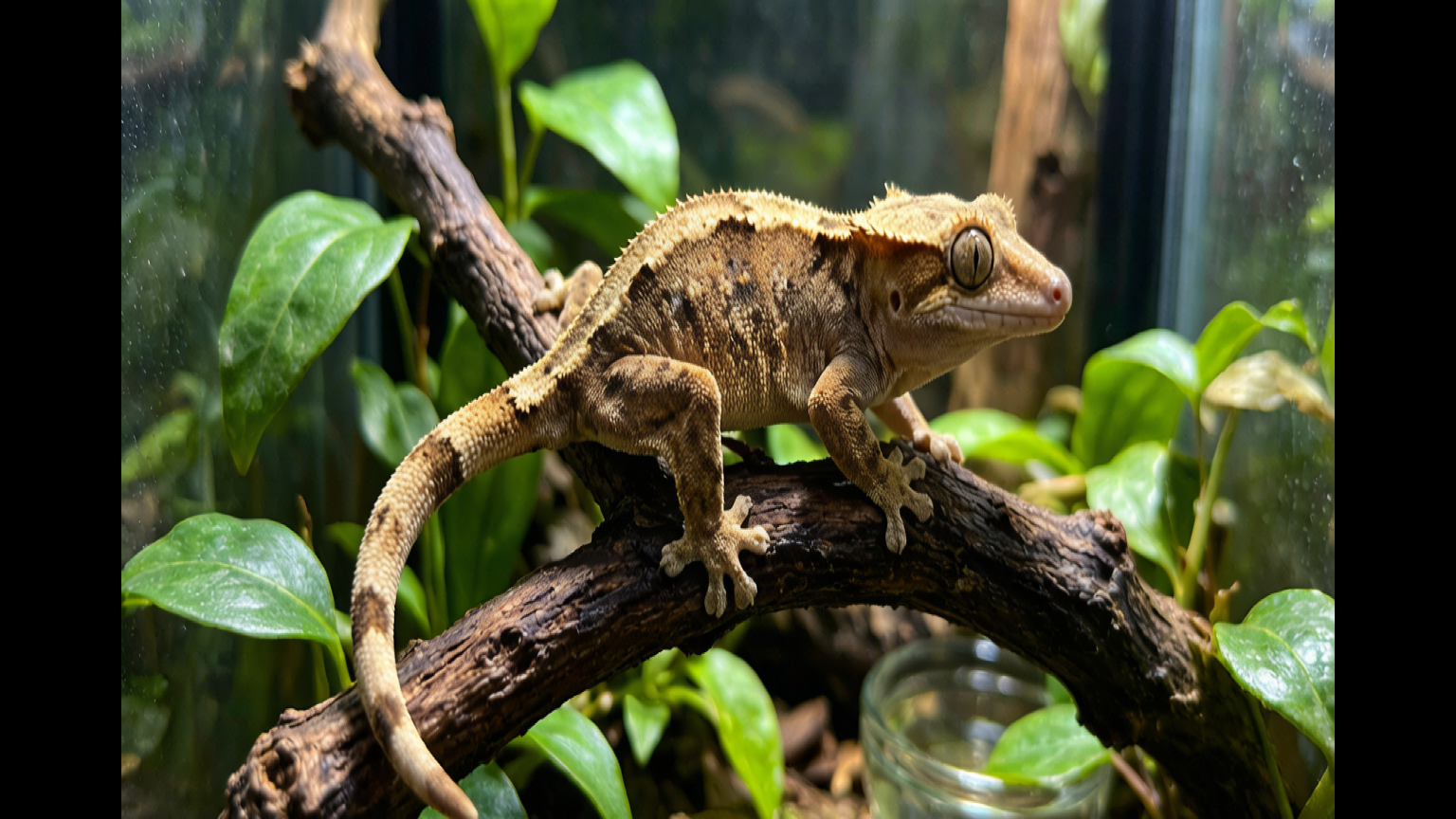
Finding your Crested Gecko’s tail lying in the enclosure — detached and still twitching — is a horrifying experience for any keeper. Understanding what just happened, why it happened, and what comes next is essential for providing proper care.
The Science of Tail Autotomy
Crested Geckos, like many lizards, possess caudal autotomy — the ability to voluntarily detach their tail as a predator escape mechanism. The tail has specialized fracture planes within the vertebrae, surrounded by ring-shaped muscles that clamp shut immediately after detachment to minimize blood loss. The detached tail continues to twitch and writhe for several minutes — this is a deliberate evolutionary adaptation to distract a predator while the gecko escapes.
Multiple triggers can cause tail dropping: being grabbed or restrained by the tail (never handle a gecko by the tail), extreme fright (loud noise, sudden movement), getting the tail caught in enclosure decor, fighting with cage mates (Crested Geckos should always be housed individually), or even severe stress during handling. Sometimes, the cause is never identified — spontaneous tail drops do occur in otherwise healthy geckos.
The Critical Difference: Crested Geckos Do NOT Regenerate
Unlike Leopard Geckos or many other lizards, Crested Geckos cannot regenerate their tail. Once dropped, it is gone forever. The wound site heals into a small, smooth nub colloquially called a “frog butt” by keepers. This is purely cosmetic — a tailless Crested Gecko lives a completely normal, healthy life. In fact, many wild adult Crested Geckos are naturally tailless, and some keepers find the frog-butt appearance endearing.
Immediate Post-Drop Care
1. Remove the detached tail — it will rot if left in the enclosure. 2. Move the gecko to a clean, simple quarantine setup with paper towel substrate (to keep the wound clean). 3. Remove any loose substrate (eco earth, moss, etc.) that could stick to the healing wound. 4. Monitor the wound site — it should form a clean scab within 24-48 hours. 5. Do NOT apply any ointments or medications unless prescribed by a veterinarian — most home remedies cause more harm than good. 6. Maintain ideal humidity (50-70%) and temperature (72-78°F/22-26°C) — stress from improper parameters delays healing. 7. Watch for signs of infection: redness spreading from the wound, swelling, discharge, or the gecko refusing food. Any of these indicates a veterinary visit.
The gecko may be slightly subdued for 1-2 days post-drop — this is normal. Appetite should return within 48 hours. The tail drop itself is painless (the mechanism evolved specifically to be a non-traumatic sacrifice), but the stress of the triggering event may suppress appetite temporarily.