If you have ever petted your rabbit and come away with a handful of fur — not just a few stray hairs, but an actual, palm-sized tuft — you have met the reality of rabbit molting. Shedding in rabbits is not the gentle, background-level hair loss you might expect from a short-haired dog or a cat. When rabbits molt, they really molt. We’re talking about losing an entire coat of fur in a matter of days to weeks, revealing skin that can look alarmingly patchy to the uninitiated. For new rabbit owners, the first major molt can be genuinely frightening: Is my rabbit sick? Are they in pain? Should I call the vet?
The answer is usually no — shedding is normal, predictable, and manageable. But it’s also one of the most misunderstood aspects of rabbit care, and knowing when shedding is “just shedding” versus when it signals a health problem can literally save your rabbit’s life. In this guide, we’ll cover the science of rabbit molting, what to expect at each life stage, how to manage heavy sheds, and the warning signs that fur loss is something more serious.
The Science of Rabbit Molting
Rabbits, like all mammals, replace their coat periodically. But rabbit molting is unusual in its intensity and pattern. Rather than losing a few hairs here and there year-round (like humans), rabbits tend to molt in “coats” — shedding their entire existing coat and growing an entirely new one. This process is driven by photoperiod (day length), temperature changes, and hormonal fluctuations.
A rabbit’s skin has follicles that produce either guard hairs (the coarser, longer outer coat) or undercoat (the soft, dense insulating layer). During a molt, both layers are replaced, but not always simultaneously. Some rabbits molt “neck to tail,” with the fur loss progressing in a visible wave across the body. Others seem to lose fur everywhere at once, leaving them looking permanently disheveled for a few weeks.
“The first time my Mini Rex molted, I genuinely thought she had mange. She had these perfectly round patches of thin fur on her sides, and I was already on the phone with the vet before I realized it was just a normal molt pattern. Now I know that ‘patches’ are normal — but I also know what isn’t normal, and that’s the important part.” — Jenna D., 5-year rabbit owner.
How Often Do Rabbits Shed?
The shedding frequency depends on the rabbit’s age, breed, and living environment. Here’s the general pattern:
Juveniles (under 4–5 months):
Baby rabbits are born with a soft, fine “baby coat” that is eventually replaced by their adult coat. This first major coat change typically happens around 4–5 months of age. During this transition, you may notice increased shedding and changes in coat texture and color. A black rabbit kit might develop a coat with subtle reddish tinges; a Chinchilla-patterned rabbit might lose the baby fuzz and reveal their “real” adult coloring. This is normal and temporary.
Adults in outdoor or semi-outdoor environments:
Rabbits exposed to natural light cycles typically have two major molts per year: one in spring (shedding the heavy winter coat) and one in fall (shedding the lighter summer coat in preparation for winter growth). These major molts can last 2–6 weeks each and involve the loss of the entire coat.
Adults in indoor environments:
Indoor rabbits live in artificial light and climate-controlled environments, which disrupts the natural photoperiod cueing system. As a result, indoor rabbits often molt 3–4 times per year, and the molts may be less synchronized (some fur here, some fur there, all the time). This can actually be more work for the owner because there’s no “intensive” period to focus on — it’s a low-level but constant fur management challenge.
Seniors (7+ years):
Older rabbits may shed less overall as their coat growth slows with age. However, the fur they do have may become thinner, coarser, or more prone to matting because the underlying skin is less elastic and the grooming instinct may be reduced by arthritis or dental pain.
Recognizing a Normal Molt
A normal molt has several characteristic features. Recognizing them helps you distinguish “just shedding” from something that needs veterinary attention.
Signs of a normal molt:
- Symmetrical fur loss: Both sides of the body tend to molt at roughly the same time. Perfect symmetry is a strong indicator of a normal molt.
- No skin lesions: The skin underneath shed fur should be healthy — pink (in light-pigmented rabbits) or normally colored, with no redness, scabs, flakes, or bare patches that look inflamed.
- No excessive scratching: A moulting rabbit may groom more, but they shouldn’t be violently scratching or biting at their skin.
- Normal appetite and behavior: A rabbit in a normal molt eats, drinks, plays, and poops normally. If they stop eating, that’s not the molt — that’s a vet emergency.
- New fur visible: Within days of fur loss, you should see short, new growth coming in. The “patchy” look is temporary.
When Fur Loss Is NOT Normal
Not all fur loss is a molt. Rabbits can lose fur due to a variety of health problems, and distinguishing between “normal molt” and “problem” is a critical skill. Here are the red flags:
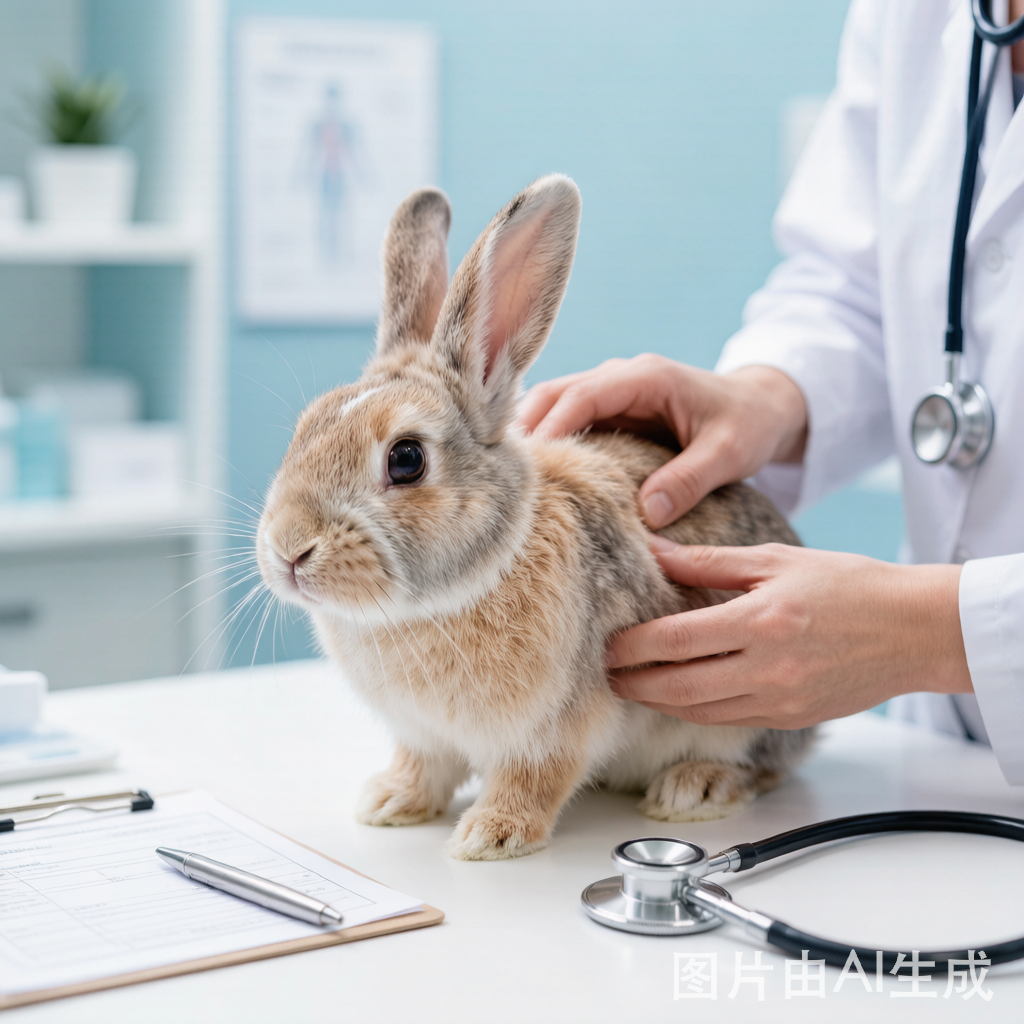
Warning signs that require veterinary attention:
- Asymmetrical fur loss: If fur is missing on one side but not the other, or in one specific spot only, this suggests a local problem (parasites, injury, infection) rather than a systemic molt.
- Skin lesions, scabs, or redness: Healthy moulting skin looks healthy. Anything that looks inflamed, crusty, or wet needs a vet.
- Excessive scratching or biting: This suggests parasites (fur mites, fleas) or a fungal infection (ringworm).
- Fur loss around the eyes, nose, or mouth: This can indicate dental disease (the rabbit is pulling fur due to pain), parasite infestation, or skin infection.
- Fur loss on the dewlap or chest in unspayed females: This can be a sign of false pregnancy (the rabbit pulls fur to build a nest) or, more seriously, uterine cancer.
- Sudden, rapid fur loss with lethargy or appetite loss: This combination suggests systemic illness, not normal shedding.
“My rabbit, Clover, started losing fur in a perfect stripe down her back. I thought it was a weird molt pattern and waited two weeks. Turns out it was a severe flea infestation — the fleas were biting along her spine where she couldn’t reach to groom. I felt terrible for waiting. Now I know: if fur loss looks weird, call the vet.” — Tom B., rabbit owner.
Managing Heavy Sheds: A Survival Guide
When your rabbit is in a heavy molt, your job is to remove loose fur before your rabbit swallows it. This is the single best prevention for wool block (covered in our brushing article). Here’s your molt-management toolkit:
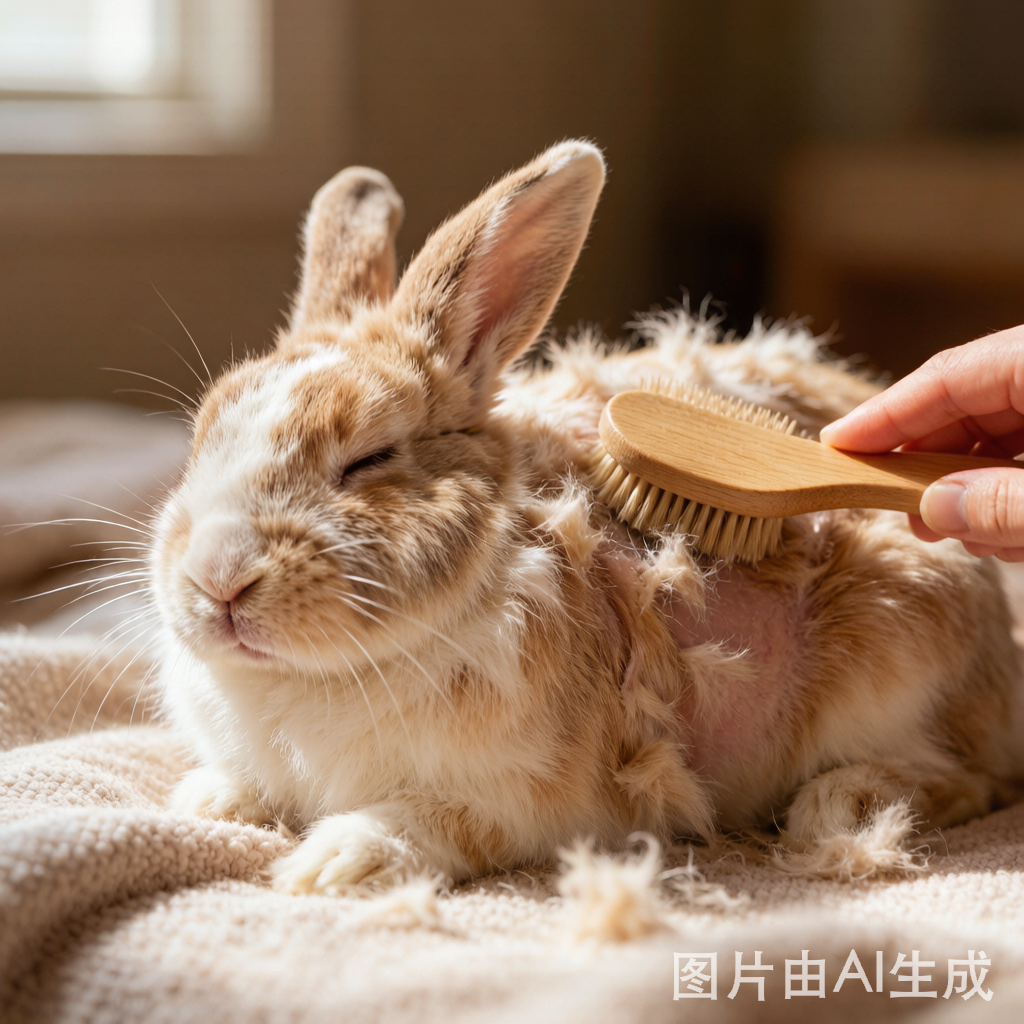
Daily brushing:
During a heavy molt, brush your rabbit every day. Not every other day — every day. Use a slicker brush or a fine-toothed comb to remove loose undercoat. Follow with a damp-hand pass (run slightly damp hands over the coat) to pick up any remaining loose fur.
Increase hay consumption:
The fiber in hay helps move swallowed fur through the digestive tract. Some owners offer a slightly larger portion of hay during molts, and you can also offer multiple hay sources (a rack, a loose pile, and some scattered on the floor) to encourage more eating.
Pineapple and papaya: myth vs. reality:
You may read online that feeding pineapple or papaya helps with fur passage because these fruits contain enzymes (bromelain and papain) that “break down fur.” The reality is more nuanced. These enzymes are denatured (deactivated) by stomach acid and don’t survive to the intestine in any meaningful quantity. A small amount of fresh pineapple or papaya as a treat is fine, but it’s not a substitute for brushing and hay. Don’t rely on “enzyme fruits” to solve a wool block risk.
Bathing: never (with rare exceptions):
Never bathe a rabbit to remove loose fur. Bathing is traumatic for rabbits, carries a high risk of hypothermia and shock, and wet fur mats more tightly as it dries. The only exception is a vet-prescribed medicated bath for a specific skin condition — and even then, it’s done under professional supervision.
Breed-Specific Shedding Patterns
Not all rabbits molt the same way. Coat type profoundly affects shedding experience:
- Short-coated breeds (Rex, Dutch, Tan): Shedding is less visually dramatic but still occurs. Rex rabbits have guard hairs but virtually no undercoat, which changes the shedding pattern.
- Normal-coated breeds: The “standard” molt described above.
- Long-coated breeds (Angora, Lionhead, Jersey Wooly): These rabbits don’t “shed” in the traditional sense — their wool grows continuously and must be manually removed (brushed out or shorn). An Angora that isn’t regularly groomed will develop a massive, matted, floor-length coat that is intensely uncomfortable and dangerous.
- Satin breeds: Satin rabbits have a unique hair shaft structure that gives their coat a glossy appearance but also makes the fur more brittle and prone to breakage. They may appear to shed more than they actually do.
Nutrition and Coat Health
A healthy coat starts from the inside. Rabbits with poor nutrition often have dry, brittle fur that sheds irregularly or develops bald patches unrelated to normal molting. Ensure your rabbit’s diet includes:
- Unlimited grass hay: The foundation of coat health. Nutritional deficiencies show up in the coat first.
- Fresh water: Dehydration makes fur brittle and skin flaky.
- A small amount of high-quality pellets: Look for pellets with at least 18% fiber and no added seeds, nuts, or colorful “mix” pieces.
If your rabbit’s coat looks dull, feels brittle, or sheds constantly (not in cycles), review the diet first. If the diet is excellent and the problem persists, consult your vet — chronic coat problems can signal kidney disease, dental disease, or parasitic infection.
The Bottom Line
Shedding is a fact of rabbit life. Some rabbits handle it elegantly; others look like a mangy muppet for three weeks every spring and fall. Both are normal. Your job is to brush frequently during heavy sheds, monitor for signs that fur loss isn’t a normal molt, and maintain a high-fiber diet to keep swallowed fur moving through the system. With good management, shedding is a minor inconvenience rather than a health crisis — and there’s something oddly satisfying about collecting a Ziploc bag full of rabbit fur and knowing you’ve prevented a potential blockage.