If you have ever bought a “premium” rabbit toy — you know, the kind made of seagrass, applewood, and untreated pine, priced like artisanal furniture — only to watch your rabbit ignore it completely after the first 48 hours, you are not alone. Rabbits are intelligent, curious animals, but they are also creatures of habit who quickly lose interest in static environments. A toy that is exciting on Day 1 can become invisible to a rabbit by Day 7, not because the toy itself has changed, but because the rabbit has habituated to it. This is where toy rotation comes in, and it is one of the simplest, most cost-effective strategies for maintaining a happy, mentally stimulated rabbit.
Toy rotation is exactly what it sounds like: instead of laying out every toy your rabbit owns all at once, you rotate a smaller selection in and out of their environment on a regular schedule. The result? Toys that feel “new” every time they reappear, a reduction in destructive boredom behaviors, and a rabbit that stays engaged with their environment. In this guide, we’ll cover how often to rotate, which toys to include in your rotation library, how to introduce new items, and the profound effect environmental enrichment has on rabbit health and behavior.
How Often Should You Rotate Toys?
The ideal rotation schedule is every 5–7 days. This frequency keeps the environment feeling fresh without creating so much change that your rabbit feels insecure. Rabbits are prey animals; they like to know where things are. A complete environmental overhaul every day would be stressful. But swapping out 30–50% of their toys and rearranging their layout once a week hits the sweet spot between novelty and stability.
That said, you don’t need a rigid calendar schedule. Watch your rabbit. If they have clearly lost interest in a toy (it’s been ignored for three days straight), swap it out. If they are still enthusiastically chewing or tossing a particular item, leave it in rotation. The goal is responsiveness, not adherence to a clock.
“I used to buy my rabbits new toys every week because they kept destroying or ignoring the old ones. Then a behaviorist friend suggested rotation instead. I spent $40 building a ‘toy library’ of 15 different items, and now I just swap them around. My rabbits act like it’s Christmas morning every time I change things up, and I haven’t bought a new toy in three months.” — Elena V., multi-rabbit household.
Why Rabbits Need Environmental Enrichment
Boredom in rabbits isn’t just a matter of “being bored.” Chronic under-stimulation leads to a cascade of behavioral and physical problems that can seriously compromise welfare. A bored rabbit is a rabbit who:
- Chews cage bars — not because they need to wear down their teeth, but because they are frustrated and under-stimulated.
- Digs at flooring or cage liners — destructive digging is often a redirected natural behavior.
- Over-grooms — some rabbits develop compulsive grooming behaviors when they lack mental stimulation, leading to fur loss and skin irritation.
- Becomes aggressive — a bored rabbit may lunge, grunt, or bite more frequently.
- Develops lethargy — the flip side of hyperactivity is a rabbit that simply “gives up” on engagement and sits listlessly all day.
Environmental enrichment — of which toy rotation is a central pillar — prevents all of these outcomes. It mimics the cognitive challenge of foraging, exploring, and problem-solving that wild rabbits engage in naturally. Our domestic rabbits don’t have to hunt for food or evade predators, but they still have the same brains, and those brains need work.
Building Your Rabbit Toy Library
To rotate effectively, you need a “library” of toys — a collection of items you can draw from. You don’t need to spend a fortune. Some of the best rabbit toys cost nothing at all. Here’s how to build a diverse collection:
Categories of rabbit toys:
- Chew toys: Applewood sticks, willow balls, seagrass mats, untreated wicker baskets, cardboard tubes. These satisfy the instinctive need to chew and help wear down continuously growing teeth.
- Foraging toys: Treat balls, snuffle mats, cardboard boxes with holes cut in them (fill with hay), paper bags with hay inside. These tap into the natural foraging instinct.
- Digging toys: Shallow plastic bins filled with shredded paper, Carefresh, or organic topsoil. Digging is a deeply ingrained rabbit behavior, and providing an appropriate outlet prevents carpet destruction.
- Toss and chase toys: Hard plastic baby keys, small stuffed animals (supervised), dried pinecones (baked first to kill pests), toilet paper tubes. Rabbits enjoy picking up and tossing lightweight objects.
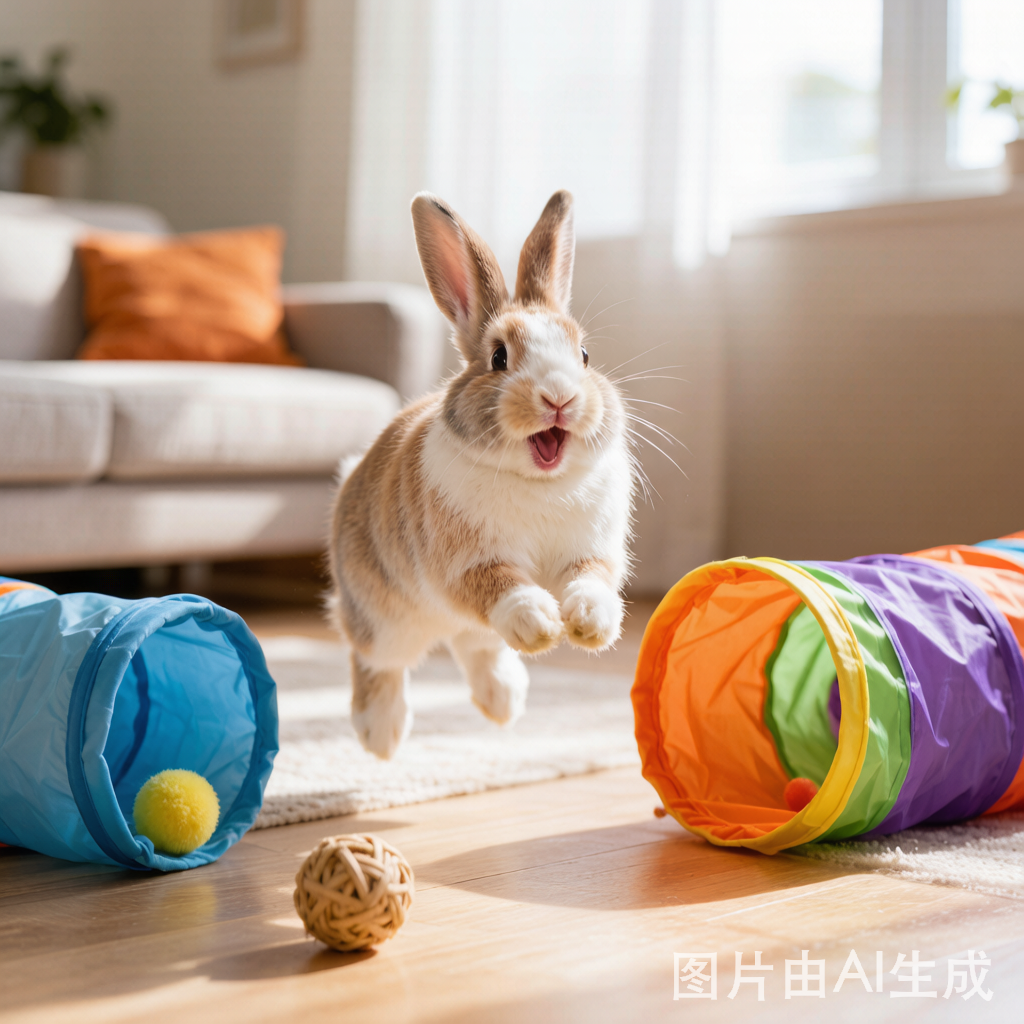
- Climbing and tunneling toys: Cardboard boxes (cut to create multi-room “houses”), large PVC pipes or commercial tunnels, low ramps. Vertical space adds dimension to a flat environment.
Budget-friendly DIY toys:
- Cardboard toilet paper tubes: Stuff with hay and fold the ends. Instant foraging toy.
- Old cotton t-shirts: Cut into strips and tie into knots. Safe for chewing and tossing.
- Paper grocery bags: Fill with hay and cut some “doors.” A rabbit-sized fortress.
- Toilet paper rolls + dryer balls: Thread a string through several tubes and hang them at rabbit height. A chew garland.
- Egg cartons: Place a few pellets inside, close it up, and let your rabbit figure out how to get the food out.
The Rotation Strategy: How to Do It
A good rotation system has three phases: observe, swap, and rearrange.
Phase 1: Observe
Spend a week noting which toys your rabbit actually uses. You may be surprised. That expensive wooden castle? Ignored. That crumpled piece of junk mail? Favorite thing ever. Pay attention to what your rabbit naturally gravitates toward and build your library around those preferences.
Phase 2: Swap
Once a week, remove 30–50% of the toys in the enclosure and replace them with “new” (previously stored) items. Don’t remove everything — leave 2–3 familiar items so the environment still feels safe.
A simple system: divide your toy library into three groups (A, B, and C). Each week, put out group A. Next week, swap A for B. Next week, B for C. Then start over. This ensures no toy sits out for more than a week at a time before getting “retired” to storage for a rest.
Phase 3: Rearrange
Even if you don’t swap toys, moving them to new locations creates novelty. A willow ball in the corner is old news; a willow ball placed on top of a cardboard box is a new challenge. Rearranging the enclosure layout every week keeps your rabbit mentally engaged without requiring a constant stream of new purchases.
Introducing New Toys: Patience Pays Off
Some rabbits dive straight into a new toy. Others approach a new object as if it’s a predator lying in wait. Prey animals are wired to be suspicious of novelty, and that includes new toys. If your rabbit ignores a new toy for the first day or two, don’t panic. Give them time to investigate on their own terms.
You can accelerate acceptance by:
- Rubbing the new toy with hay or a small amount of banana to make it smell “familiar.”
- Placing the toy near (but not in) the litter box or food area — high-traffic areas where your rabbit will encounter it naturally.
- Demonstrating the toy yourself — yes, really. Nudge a ball across the floor. Your rabbit may watch, then mimic you. Social learning is real in rabbits.
- Associating the toy with treats. Place a small treat on or inside the toy. Positive association works.
“My Dutch rabbit, Pippin, was terrified of a new tunnel for two full days. He would hop up to it, sniff it, and then bolt away. On day three, he suddenly dashed through it at full speed. Now it’s his favorite thing. Some rabbits just need time to convince themselves it’s safe.” — Carla N., patient rabbit owner.
Age and Personality Considerations
Not all rabbits play the same way. Understanding your rabbit’s personality and life stage helps you choose the right toys for your rotation.
Kits and young rabbits: High energy, easily bored, willing to try almost anything. Rotate toys frequently (every 3–4 days) and include plenty of active toys (tunnels, balls, climbing structures).
Adults: Preferences are more established. Some adults are enthusiastic players; others are more sedentary. Observe and adapt. A 3-year-old rabbit who has never shown interest in toss toys probably won’t suddenly develop a passion for them — but they might love a new foraging challenge.
Seniors: Older rabbits may have reduced mobility or vision. Choose toys that don’t require jumping or vigorous movement. Soft chew toys, low-entry foraging boxes, and familiar comfort items are appropriate. Don’t force play, but do continue to offer gentle enrichment.
Seasonal Rotation Considerations
You can also tie toy rotation to the seasons for extra engagement:
- Spring: Add fresh apple branches (washed and dried) as chew toys. Many rabbits love the novelty of natural wood.
- Summer: Include frozen water bottles (wrapped in a sock) as “cooling toys.” Some rabbits enjoy nudging cold objects.
- Fall: Introduce dried leaves (pesticide-free) in a shallow box for digging and foraging.
- Winter: Add extra cardboard boxes and tunnels. Indoor rabbits benefit from more enrichment during months when they may have less out-of-cage time.
Signs Your Enrichment Plan Is Working
How do you know if your rotation strategy is successful? Look for these positive indicators:
- Your rabbit actively investigates new items within 24 hours of introduction.
- Reduced bar-chewing, digging at floors, or other destructive behaviors.
- More “binkies” and active play behaviors during out-of-cage time.
- A generally more confident and interactive rabbit.
- Toys show visible wear (chew marks, scratches, moved positions) — a sure sign they’re being used.
If you’re not seeing these signs after 3–4 weeks of consistent rotation, reassess your toy choices. Every rabbit is an individual. The “perfect” toy for one rabbit might be completely ignored by another. The joy of rabbit ownership lies partly in figuring out what makes your rabbit tick.