There is something deeply satisfying about running a brush through a rabbit’s coat and watching loose fur fly — both for you and, if you read their body language correctly, often for the rabbit too. But brushing isn’t about vanity or maintaining a show-ring appearance. For rabbits, regular brushing is a life-saving health intervention. Unlike cats, who are legendary groomers and can usually manage their own coats, rabbits groom themselves enthusiastically but lack the ability to process the fur they ingest. All that swallowed fur has to go somewhere, and if it doesn’t pass through the digestive system, it can form a blockage known as wool block (trichobezoar) — a leading cause of GI stasis and a condition that kills more pet rabbits than almost any other grooming-related issue.
The frequency and technique of brushing depend enormously on your rabbit’s coat type. A Rex rabbit with its short, velvet-like fur has completely different needs from an English Angora whose wool can grow six inches in a single season. In this guide, we’ll cover brushing schedules for every coat type, the tools that actually work, how to spot and prevent wool block, and the proper technique for dealing with mats without hurting your rabbit or damaging their skin.
Why Brushing Is Non-Negotiable
Rabbits are fastidious self-groomers. If you watch a rabbit settle in for a grooming session, you’ll see them methodically lick their paws and drag them over their ears, face, and body, just like a cat. The problem is what happens afterward: rabbits swallow every bit of fur they remove. Unlike cats, who can (usually) cough up hairballs, rabbits cannot vomit. Their digestive anatomy physically prevents it. All ingested fur must pass through the intestinal tract and exit in the feces.
When a rabbit is shedding heavily — which happens frequently — the volume of loose fur can overwhelm the system. Fur accumulates in the stomach and intestines, mixing with digested food to form a dense, impassable mass. This is wool block. The symptoms start subtly (smaller fecal pellets, reduced appetite) and progress rapidly to complete GI stasis. Emergency surgery is sometimes the only remedy, and even then the prognosis is guarded.
“My Angora, Mallow, had wool block surgery three times in two years before I finally learned how to properly manage her coat. Now I brush her every single day, and she hasn’t had a single blockage in four years. Daily brushing didn’t just save her life — it gave me my rabbit back.” — Karen H., long-haired breed specialist.
Coat Types and Brushing Frequency
Not all rabbits are created equal when it comes to grooming needs. Understanding your rabbit’s coat type is the foundation of a good brushing routine.
Short-coated breeds (Rex, Dutch, Tan, Havana):
These rabbits have a dense, short coat that lies close to the body. Loose fur is less visible but still accumulates during shedding season. Brush once a week during non-shedding periods and 2–3 times per week during shedding. Use a soft-bristle brush or a rubber grooming glove; stiff bristles can irritate their skin.
Normal-coated breeds (most pet rabbits, including mixed breeds):
The “standard” rabbit coat is about 1–2 inches long, with a soft undercoat and slightly coarser guard hairs. These rabbits need brushing 2–3 times per week year-round, and daily brushing during shedding. A slicker brush or a fine-toothed comb works well for these coats.
Long-coated breeds (Angora, Lionhead, Jersey Wooly):
Here is where things get serious. Long-coated rabbits require daily brushing — no exceptions, no days off. Angoras in particular need brushing twice a day during heavy growth periods. These breeds were literally developed for their wool production, and without human intervention, their coats will continuously grow, mat, and eventually cause life-threatening welfare issues. Many Angora owners shear their rabbits every 3–4 months, but even sheared rabbits need regular brushing to prevent matting as the wool grows back.
Shedding Cycles: When Brushing Becomes Critical
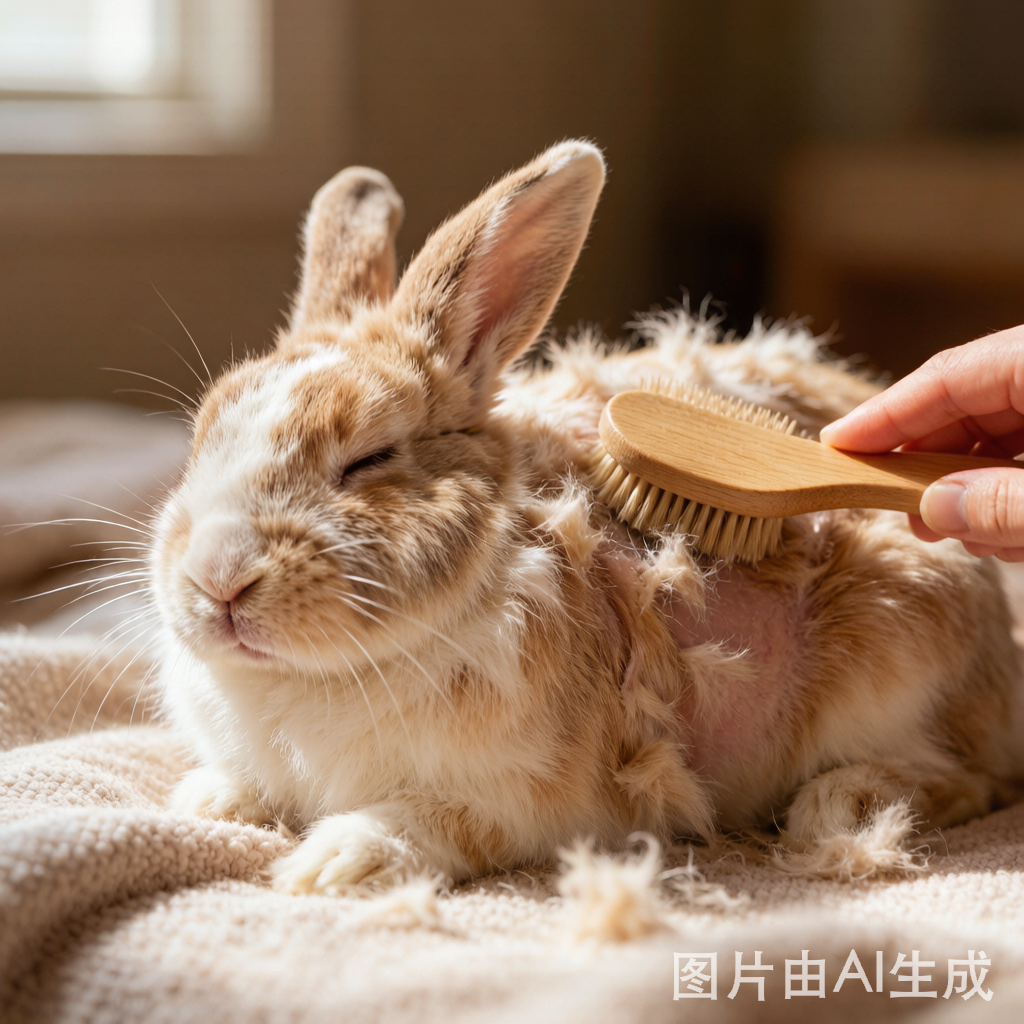
Rabbits don’t shed evenly throughout the year like some dog breeds. Instead, they have two major molts (spring and fall) during which they shed their entire coat, and several smaller “mini-molts” in between. During a major molt, you may literally be able to pull handfuls of loose fur away from your rabbit’s body. This is the danger zone for wool block.
Signs your rabbit is in a heavy molt:
- Large amounts of fur coming away on your hands when you pet them
- Patches of thinner fur or visible skin in spots (don’t panic — this is normal during a molt)
- More fur than usual in their litter box
- Your rabbit spending more time than usual grooming themselves
- Changes in fecal pellet size (slightly smaller or misshapen pellets can indicate fur overload)
During these periods, daily brushing isn’t a suggestion — it’s essential. If you can remove the loose fur with a brush before your rabbit swallows it, you’ve prevented a potential blockage.
Tools That Work (and Tools That Don’t)
The pet store grooming aisle can be overwhelming. Here’s what actually works for rabbits:
Recommended tools:
- Slicker brush: Fine wire bristles set into a flat paddle. Excellent for removing loose undercoat. Choose one with softened tips to avoid scratching skin.
- Fine-toothed metal comb: Invaluable for detecting and working out small mats. The “greyhound comb” style is a favorite among rabbit groomers.
- Rubber grooming glove: Great for short-coated rabbits and for removing surface loose fur on sensitive rabbits who hate brushes.
- Undercoat rake: For long-haired breeds, a small undercoat rake can reach deep into the wool without cutting the skin.
- Damp hands: Surprisingly effective — running slightly damp (not wet) hands over a shedding rabbit can pick up remarkable amounts of loose fur.
Tools to avoid:
- Flea combs: The teeth are too close together and will pull healthy fur out along with the loose fur.
- Wire brushes with sharp tips: These scratch rabbit skin, which is thin and easily abraded.
- Deshedding tools (Furminator-style): These are designed for dogs and cats with undercoats that “release” fur differently. On rabbits, they can cut the guard hairs and damage the coat permanently.
Brushing Technique: Doing It Right
Brushing a rabbit isn’t like brushing a dog. Rabbits have thin, delicate skin that tears easily (“deck chair” skin, as some vets call it, because it has so little structural attachment). Aggressive brushing causes pain, skin tears, and a rabbit that flees at the sight of the grooming kit.
The correct technique:
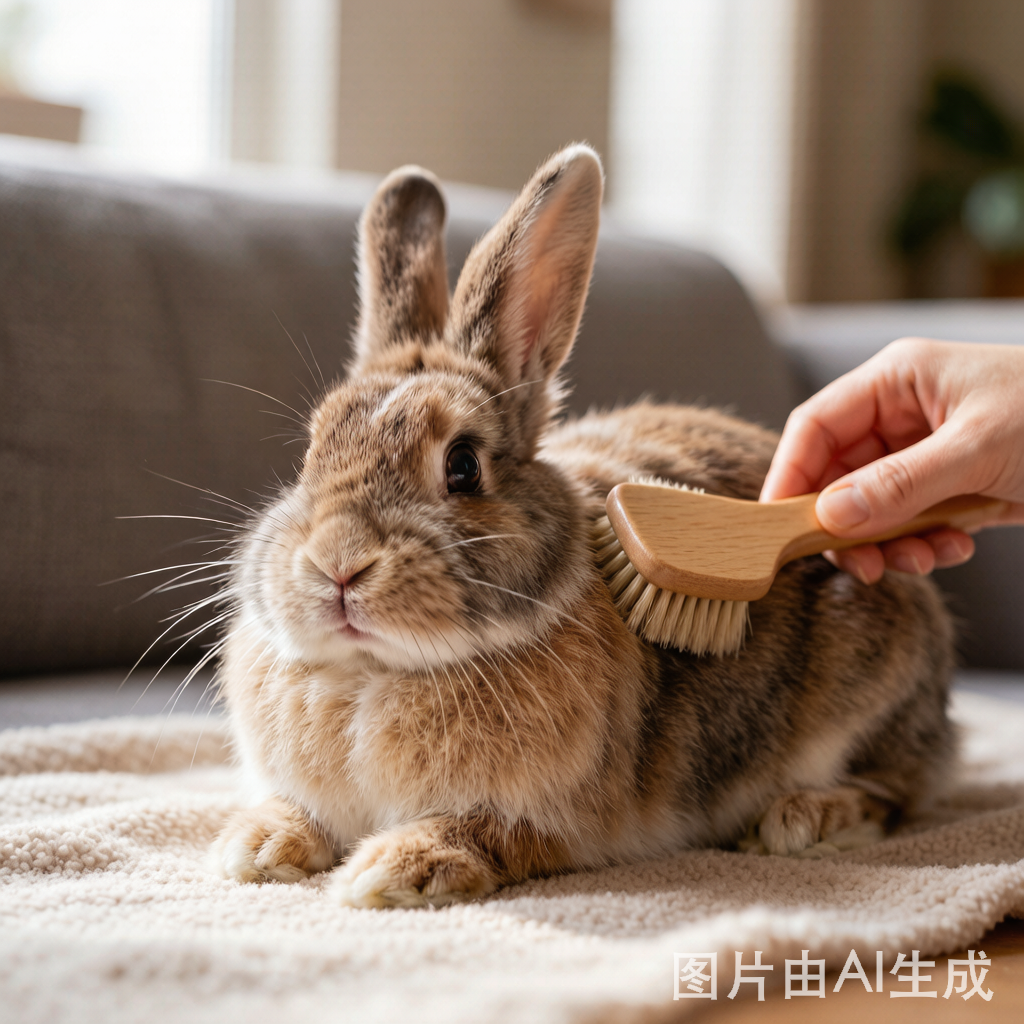
- Brush in the direction of hair growth (tail to head is against the grain and should only be done gently to lift out undercoat — the final pass should always be tail-to-head to lay the coat flat).
- Use long, gentle strokes. Don’t bear down. Let the brush do the work.
- Start with the easiest areas — the back and sides. Save the belly, chest, and sanitary areas for last, as these are the most sensitive spots.
- Watch for moles, lumps, and skin issues as you brush. Regular grooming is one of the best ways to catch health problems early.
- Reward frequently. Offer a small treat after every section brushed. Make it a positive experience.
Dealing with Mats
Mats are more than unsightly — they pull on the skin, restrict movement, and can hide serious skin infections, fly eggs, or maggot infestations underneath. A mat should never be ignored.
Small mats:
Use a fine-toothed comb to gently tease the mat apart, working from the edges toward the center. Hold the fur close to the skin so you’re not pulling on the skin itself. If the mat is close to the skin and tightly bound, do not force it.
Large or tight mats:
These require scissors — but extreme caution is required. Rabbit skin is so loose that it readily folds into a mat, and a single snip can cut skin. Always slide a metal comb between the mat and the skin, then cut above the comb. Better yet, ask a groomer or vet to handle severe matting. The cost of professional help is far less than the cost of treating a skin laceration or abscess.
Never bathe a rabbit to remove mats. Water tightens fur as it dries, making mats worse, and wet rabbits are at high risk of hypothermia and shock.
Wool Block: Recognition and Prevention
Wool block deserves its own section because it is the single most preventable cause of rabbit GI emergencies. The symptoms to watch for:
- Reduced or absent fecal pellets (the earliest and most reliable sign)
- Lethargy and hunched posture
- Loss of appetite, especially for hay
- Abdominal distension (a bloated, tight belly)
- Teeth grinding (a sign of pain)
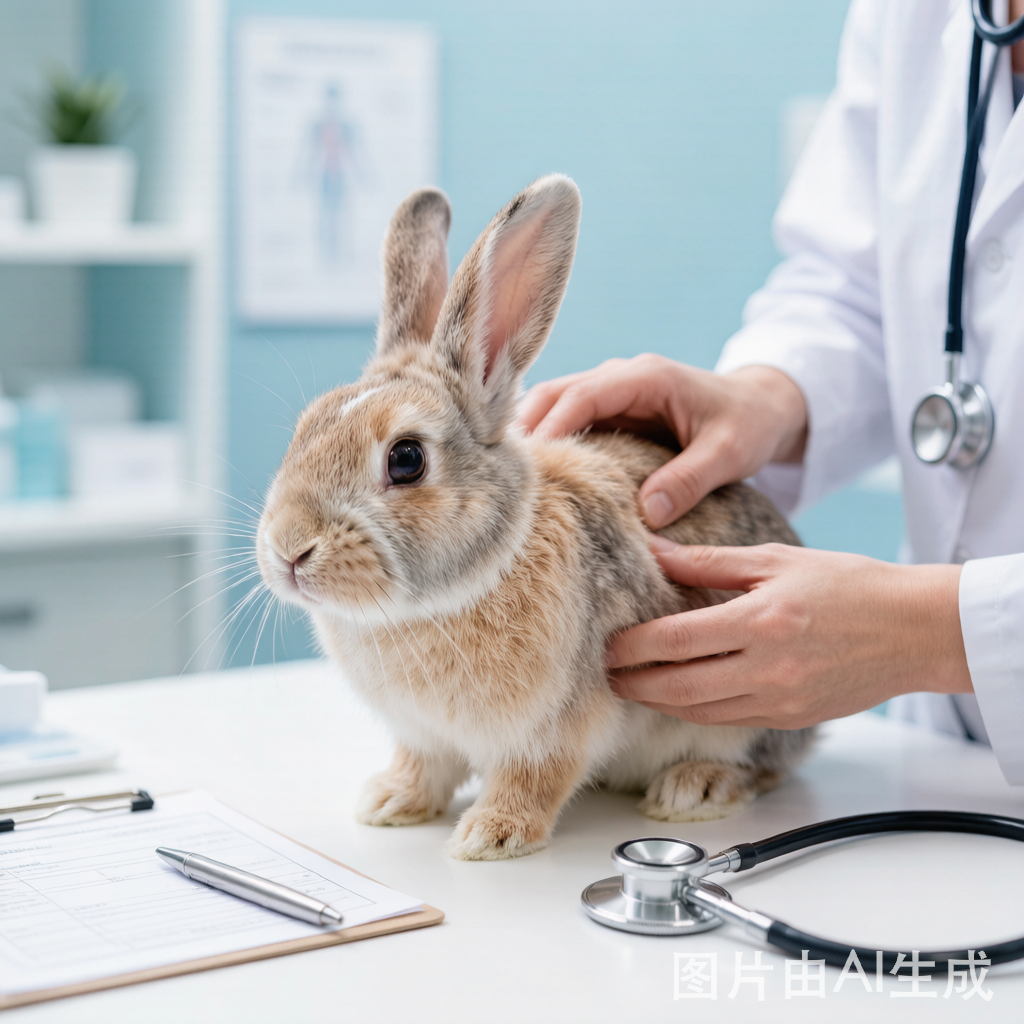
If you suspect wool block, call your rabbit-savvy vet immediately. This is not a “wait and see” condition. While you’re arranging veterinary care, you can offer fresh hay (the fiber helps push fur through), ensure water is available, and in some cases vet-approved doses of infant simethicone can help with gas pain — but these are supportive measures, not treatments.
Prevention is simple: brush regularly, especially during molts, and make sure your rabbit has unlimited hay. The fiber in hay helps move ingested fur through the digestive tract. A rabbit eating plenty of hay is a rabbit whose digestive system is actively pushing fur along.
“I check my rabbit’s litter box every morning. If I see fewer or smaller poops than usual, I know it’s time to brush more aggressively and maybe encourage more water intake. It’s become part of our morning routine, and it’s caught two early wool-block situations before they became emergencies.” — Amanda S., 3-rabbit household.
Age-Specific Brushing Needs
Kits and young rabbits: Baby rabbits have a baby coat that is eventually replaced by their adult coat (usually around 4–5 months). During this coat change, brush more frequently than you think you need to. Kits are also still learning to tolerate handling, so make grooming sessions short and very positive.
Adults: Follow the coat-type guidelines above. Adult rabbits in good health can usually be trained to enjoy brushing if you start with treats and gentle technique.
Seniors: Older rabbits may groom themselves less effectively due to arthritis or reduced flexibility. They may also have thinner skin that tears more easily. Use softer brushes, brush more gently, and pay special attention to areas they can no longer reach themselves (the lower back and base of the tail are common trouble spots in seniors).
Making Brushing a Bonding Activity
Brushing doesn’t have to be a chore. Many rabbits come to enjoy the sensation — you’ll know yours does if they lean into the brush or flop over contentedly. Build grooming into your daily routine: a few minutes of brushing while you watch TV, or a thorough session on Sunday morning with coffee. The more consistent you are, the less loose fur ends up in your rabbit’s stomach, and the more time you spend building the human-rabbit bond that makes pet ownership so rewarding.